Thursday, 24 April 2025

 Easter 2025

 Lessons Learned from the Andes


First of all, to talk in a single blog about what we’ve learned over the 14 years of living in a Quechua community at 3,000 metres, seems ludicrous-- TOO MANY!


Who from? I want to give some kudos to those who spoke into our lives.

A few strong mentors helped us along the way as well as many friends who themselves encapsulated personal lessons. Al and Barb Shannon as well as John and Sheila Tuggy gave us continual orientation and guidance especially regarding the many cultural nuances in Peru’s coast, mountain, and jungle climes and especially in understanding the “ins-and-outs” of working with SIL as an organization.


Then in the mountains specifically, Profs. Leonel Alexander Menacho López and Gabriel (Don Gabïchu) Barreto Echiparra were our point-persons when it came to work through the various education ministry offices, while Don Gabïchu’s connections [“padrinazgo”] with the faraway Andean villages, granted us greater acceptance and, well, safety. Both men carried with them the same vision of service to their Quechua people, constantly reminding us why we were there and how far we had gone. I guess what I’m saying is, these people provided constant tutorials and encouragements (too many to number) that we cherish to this day.

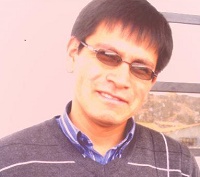


More personally were the proteges we worked with, above all Eduardo and Tobías Mendoza Diaz. Their excitement about and dedication to the work in the communities especially Eduardo’s leadership in teaching using the various publications of short Quechua and biblical stories, as well as the Quechua songbooks, all seemed to make each day’s work that much more meaningful to me: It seemed I was having a positive impact on some people I had grown fond of and who they went on to become-- excellent teachers and mentors!


And I’d be remiss if I didn’t mention Monseñor Dante Frasnelli Tarter, OSJ, then

Catholic Bishop of the Conchucos Valley, Región Chavín, who befriended us and always welcomed us both into his offices and home. His vision for a “single Christian faith” across the Andes paralleled our vision embedded in our program logo TAYTA DYOSPA WILLACUYNINGA LLAPANTSICPÄMI [“The Word of God is for everyone”]. He was the person who authorized our training of the dozens of Catholic lay-workers (catechists) throughout the many mountain towns, culminating in the overwhelmingly successful celebration, dedication and partial distribution of the New Testament in the particular variety of South Conchucos Quechua.


Finally SIL-Peru’s staff and many administrators dedicated themselves to “keeping us safe and working”. John and Billy Mishler in Lima, were especially helpful and always concerned.


Lesson #1. The primary lesson for me of those amazing 16 years:


Whatever you do, be consistent.


Consistent in activity and in one’s character.


Example: One Sunday after shopping in Huari’s market and attending Mass, Linda and I were requested to attend apparently an impromptu meeting with Bishop Dante along with about a dozen of his Quechua priests who had gathered in Huari that particular weekend from all over the valley. The bishop explained that as he was returning from his 8 hour drive from Huaraz, he saw a couple of gringos gathering some people together in a nearby town. “I got out of my car, called them over and asked what they were doing.”


“Just reading the Bible with these people” one answered.


Bishop: “You’re not just reading to them, gentleman. You are stirring them up. You wish to start another congregation; another church. Doesn’t the Bible say that there’s only one church? You are being divisive and separatist.” They were dumbfounded and really couldn’t respond.


Then in the meeting in front of all those priests the Bishop turned to Linda and I and said, “But Randy, you don’t do that. You claim the Bible is for everyone and you are here to stand along side us. Thank you for doing that!”


What would have happened if we had somehow changed our methods and not kept our word? Chaos!


Lesson #2. Be mindful; have perspective: Walk a mile in their shoes.

The saying "walk a mile in another man's shoes" originates from the Cherokee Native Americans, who would say, "Don't judge a man until you have walked a mile in his shoes (moccasins)". This proverb emphasizes the importance of understanding someone's perspective and situation before passing judgment. Harper Lee's novel To Kill a Mockingbird popularized a similar sentiment: "You never really know a man until you understand things from his point of view, until you climb around in his skin and walk around in it".


From the first day we arrived in Peru (July, 1986) we saw a different world from what either of us grew up in. We saw crime, poverty, corruption, and disease up close. It shook us. It’s no wonder that 80% of development workers return home to stay after the first 4 years of service.


Once, after a church service, we were walking down Arequipa Ave. in Lima and saw someone grab something from the neck of a fellow SIL worker and run off. It was a necklace her mother had gifted her. I reacted and ran after him through kiosk stalls until he turned back and bumped right up against me and I held out my hand, “Dámelo” and he spat the necklace out of his mouth. I looked it him angrily then saw a desperation in him, more than fear. I let him go. Many afterwards said what I did was wrong; that I should have shaken him up and called a cop or perhaps preached at him. I was just happy that my colleague recovered her necklace and was unharmed. Could I ever become so desperate as to steal? I wondered.


The “situation-ethic” of how to handle poverty in Peru haunted us every day. We developed what have become natural responses we use to this day. If someone, for example, asks for money, I ask why. If they say “For food” or “I’m hungry,” then I take the time to go with them to buy something nutritious (but not expensive). Also, Linda and I still carry cans of tuna in our car so that, when someone at a stoplight walks among the cars and asks for a handout, we have a full meal (and cheap!) to offer them. At least it’s something.


Lesson #3: Stay humble.


Our years actually living in a Quechua community and participating in their activities and festivals has given us many life lessons. Our very manner of communication had begun to change, perhaps softening the way we say something and perhaps with less pride, even arrogance.


This was confirmed when we were in Fort George Baptist Church in Prince George, BC Canada sharing in a small Sunday evening group, mostly of Canadian First Nations men and women (Babine Carrier and others). We were talking about working with Quechuas, struggling with them, yet seeing meagre results. Two or three first nations men were standing in the back, with their arms crossed in front of their chests. But as I explained the struggles and the wins, they slowly lowered their arms and began to nod their heads. You see, it wasn’t so much what I said as “how” I said it. They identified the pain of our experience.


These lessons and mentors have served us well as we navigated both re-integration into Calgary and then retirement into Mexico. May we remain consistent, mindful, and humble.  


Monday, 14 April 2025

 Raising a family and working in the Andes - April 14, 2025

8 yr old Greg threshing wheat with horses and a mule

Caveat: I’m no expert, just an experienced “old-squirt” (ha!)


Seriously, I’m proud of both my sons. My older son Greg, specifically has had to play catch-up becoming a father to his wife’s now 10 year-old Mati, and then with his second son, Leo, who’s 3 years old. Wow! Linda and I had 7 years of marriage under our belts before our kids arrived: Enough time to really get to know one another (so glad we did that since we grew up in vastly different cultures between Northern California and north-central British Columbia, Canada). Honestly the way Linda took to becoming a mother was soooo satisfying to me: I had no idea this would happen!


Giving birth in a natural-birthing clinic in Lima was one thing! Then there was caring for infants, then toddlers while living in a rustic Quechua village with mud walls and floors! With continual improvements on our home with the help our “compadre” Erpidio, we had a decent latrine out back, cement floors, and cement and stucco (plastered) walls both inside and out onto our front patio, all within a 2-year period. It seemed for the first few years like all we were doing was cleaning, eating and caring for the kids. But THAT’s what attracted our neighbors to us: Our dedication to “stick to it” and remain in the village for as long as we did.


Our kids grew-up surrounded by other kids, lots of aunties, uncles and PLENTY of farm animals (pigs, goats, chickens, cows, horses, donkeys, dogs, cats… and guinea pigs! For them every day was entertaining and an adventure. Some friends thought that raising kids surrounded by Spanish, Quechua and English would hamper them in their educational development: NOT! They loved it and played games with it as well. Sometimes Linda and I’d speak to each other either in Quechua or Spanish pretending to hide a secret conversation from them. That just made them all-the-more anxious to pick up all three languages! Ha! So as far as safety and security was concern we really were in the best place possible. Why? Because it was our Quechua godparents then, by extension, the whole of Cajay that accepted us there.


And there were culture clashes for sure! One day an old Quechua farmer knock on our old wooden front door.

“Gringo-Anchi,” he said (Anchi is a diminuative form of Andres, the name I used in Peru).

“Wanna buy my donkey?” I declined and he further persisted, so I thought I’d have a bit of fun.

“I don’t eat donkey and can’t use it in my home.”

Shocked, he responded. “Whaaa?? You don’t eat donkey! You can’t eat my donkey!!” And to stomped off. About an hour later my compadre Erpidio knocked and asked, “Did you say to that old man you wanted to eat his donkey??!!”

I explained what happened and thought that might be a way to discourage him from persisting in trying to sell it to me. Erpidio busted out laughing. “That’s great! Now the whole town thinks you eat donkey ‘cuz he’s telling everybody!”

Oh there were other problems: Sickness, rain, landslides and a few Shining Path incursions into the valley. One required us to leave the valley and live for two years in our SIL group compound in nearby Huaraz, 8 hours’ drive over the summit to the west). When Linda was 8 months pregnant with Greg we almost didn’t make it out of the valley due to a landslide. We tried to cross a stretch, counselled by a foreman of the road crew at the landslide site, and our Toyota 4x4 Hilux sunck in the mud to bottom of the doors! It wasn’t until the nearby tractor pulled us out onto the far side of the road (going to the coast) that we were able to continue: Whew!


This lifestyle provided a great built-in rural education for our kids. Schooling was anther matter. We brought grade school curricula with us from Canada/USA and worked with them a few hours a day. Sometimes we had an itinerant teacher, Bonnie (from Jackson Hole, Wyoming), who spent several months with us working with the kids every day. She was a professional biologist who at one time worked at Ecuador’s famous Galapagos Island, so she brought with her her infectious wonder of nature and the kids really took to her. This was one more way SIL supported us and we were thankful for her being there!


Conchucos Valley is home to Caritas, Catholic Relief offices, as well as the regional bishop of the area who was ensconced in Huari, the provincial capital. In every district town in the province there was a chapel where the local priest would come and visit with the locally assigned catechists. As a result there were many religious events as well as national holidays celebrated in our community of Cajay which we regularly participated in. And every day the village primary school sang Peru’s national anthem so our kids became quite familiar with both the words in Spanish and the tune (BTW, since they were born in Peru to this day our sons also have Peruvian passports!).


Many festivities took place during the year with decorative costumes (Huari Dansa, Pallas, Yuriwas dance groups, for example). But our favorite was “Pastorcillo,” which was celebrated on 3 Kings day or Epiphany (Dia de los Reyes, Jan. 6). It was a festivity involving all the villages throughout the province where children were chosen to represent and enact a traditional morality play with children as the dancers, singers and actors. [Note: you can watch this musical play from the nearby town in Sihuas, Ancash. https://www.youtube.com/watch?v=6zCxGOWOuh8]. This was the most delightful (and sober!) festival during the year and our kids loved it!


All inhabitants in the village of Cajay were farmers. Some also had specialty trades such as carpentry, blacksmithing, cobbling, the milling of wheat and corn, and even the making and oven firing of adobe roof tiles. So Cajay’s agrarian cycle was full throughout the year: Corn, wheat, and potato planting, irrigating, weeding and harvesting. We too took part in each of these as we were invited by our “compadres” and neighbours. The kids were not required to pitch in, but they did anyway in their own way: Looking after stray farm animals, threshing and winnowing wheat, and of course eating the famous PACHAMANKA --pit-roasted beef, pork, and chicken along with potatoes, corn, and oca. Yum!


In summary, years later I have asked both my boys to look back on those times. When they do, I get bright smiles and… “Aaaahhhh!”


‘Nuf said!

Monday, 7 April 2025

200 years of social and cultural change in a decade!


200 years of social and cultural change in a decade!


Remember the span of 16 years where we lived in the Peruvian North-central Highlands (1986-2002)?

Well the 90s was a decade of incredible change in Peru and we were smack-dab in the middle of it!


The country’s infrastructure was in great need of improvement (health, education, roadwork, etc.). Meanwhile the infrastructure of SIL-Peru in many ways kept us going. They sent us “encomiendas” of mail by the regional bus routes arriving at the provincial capital of Huari. They also provided group housing in Lima, Huaraz and in the jungle (Pucallpa) while we were there for government documentation and for linguistic planning sessions. This is where our boys were exposed to the rarified air of American kids and culture. Being from California I felt more-or-less comfortable in this group, whereas Linda (Canadian) and our German and Swiss co-workers learned to adjust to some pretty significant cultural differences. Nonetheless this climate was consistent and sustainable especially for the American families living there. They provided children’s American style education, play areas and interaction in English. These islands of English-speaking culture and the relationships afforded us assistance when we were in Lima and Huaraz.


But Peru’s society and economy went through tremendous upheaval in the 90s, much of this due to the various economic crises (including “Fuji-shock” instigated by the then President Alberto Fujimori), continual diseases (cholera, typhoid, malaria, etc.) as well as the rise-and-fall of two terrorist groups: Shining Path and MRTA (Movimiento Revolucionario Tupac Amaru). While Peru’s military increased their public face, especially in the major cities via sporadic checkpoints across the country, weekly terrorist incursions (bridge/building explosions) caused greater stress, blackouts and need for increased security. Needless to say, travel across municipal and national highways were riskier. “Toques de queda” (curfews) were becoming a consistent pattern, in Lima especially. There were also the staged blackouts by Peru’s national power companies as a chessboard strategy to avoid transformer damage from terrorist attack (ie., to keep the terrorists guessing).


Actually Shining Path terrorists had begun using car bombs in the mid-80s. While we were in Lima on 17 July 1992 a bomb exploded on Av. Arequipa in Miraflores (Lima’s financial and tourist district) 18 people died and windows were shattered in skyscrapers for blocks. Auto and pedestrian traffic was locked down for several days. Over the next decade these terrorist activities increased in frequency and spread nationally dividing the country socially and economically. Hearing these explosions while close to the explosion site and seeing the glass and debris everywhere was unnerving!


Upper-middle class communities in Lima and other major cities maintained their lifestyle and jobs with increased security while the middle and lower classes struggled with a crippled public transportation system and daily military inspections. The country quickly tumbled into a recession and an increase in petty crime. Both Lima’s pharmacies and bread stores required armed guards for protection. The sad joke was “Si no estás en la coca estás en la cola” If you aren’t in to coca (drugs) you are in the line ups. At one time Lima actually had a shortage of insulin in the drugstores!


Cholera, endemic particularly in the shellfish off Peru’s coast, broke out across Peru’s major coastal cities (Piura, Trujillo, Chimbote, Lima) requiring a stronger filtration of potable water and improved standards in the canning of seafood. Some tuna cans from Peru arrived on the East seaboard of the USA infested with cholera. Money had been allocated for improved water treatment along the coast but it disappeared and the untreated water spread the endemic infections into an epidemic. At the same time Peru for the first time became an IMPORTER of sugar from Brazil. Prior to this period, Peru had always been a net food EXPORTER.


At one time the inflation rose to 2,000 %… per month!


All that being said, improvements in the national infrastrcture DID begin to occur mid-90s. Fujimori’s crew of engineers initiated a complete renewal of Peru’s Pan-American coastal Highway and then extended concrete paving work up into the Highlands into cities like Trujillo, Huaraz, and Arequipa. More freight and better bus lines arrived into the hinterlands, in both the mountains and the jungle. New international supermarkets like the Chilean E. Wong stores entered the major cities transforming daily shopping and challenging the national companies like the “Todos” supermarkets. The quality and variety of goods and produce was a whole new world for the Peruvian consumer and even the faraway mountain and jungle cities and towns reaped the benefits over long distances with more accessible shipping.


The mid-90s was remarkable transformation in Peru’s highland communities:

Previously our village of Cajay had no electricity. Instead we, along with everyone else, used a deep cell 12-volt car battery for light and basic radios. It required carting the battery each week to Huari for recharging where a diesel generator was powering that provincial town of 4,000 inhabitants. Peru’s electrical grid in the mid-90s finally installed a 14,000 volt power poll /transformer just outside our wall. It fell against our house the first year due to heavy rains and improper installation, but still it arrived! Fortunately the wires didn’t touch our roof and we were able to evacuate in the torrential rain to the safety of our neighbours’ house, until they could cross the valley and turn the power off at the power plant. Local community-based radio and TV stations sprouted up all over the valley!


Then the Peruvian government contracted the Spanish company Telefonica, S.A. to install cell-towers across the country (coast, mountains, and even jungle). This was huge: No longer was it necessary to install telephone polls and lines across the rugged mountains (an expensive venture for small towns!). Instead cellphone towers provided for the first time affordable communications! Where one year my phone call from Huari, our Conchucos Valley provincial capital, to San Jose, California cost me $9 USD per minute-- the next year a cellphone call was free! Wow!


In the mid-’90s, via municipal elections and public outcry, government projects in many parts of the highland worked to install a system of running water plumbed from house-to-house, as well as a public sewer system for decent sanitation. This transformed kitchens as every house now had a spigot and water inside the courtyard. This allowed us the use of on-demand propane hot water! Slowly the communities abandoned the crude latrines for water-plumbed toilets often installed in the old outhouse.


Cajay transformed from an 18th century agrarian society to a modern, electrified, running water, and cellphone connected community in 10 years. What a ROLLER COASTER ride that decade was!

Friday, 28 March 2025

survival ---> REALLY LIVING!


Survival


Surviving: "live beyond, live longer than," from super "over, beyond" (see super-) + Latin vivere "to live").


Another word for this is “overcome, overcomer” as in “living through trauma”


So what’s so traumatic about 16 years at 11,000 ft (3,000 mts) and a hard 12 hour ride from Peru’s capital city of Lima? Generally it’s one adjustment or accommodation after another until, sooner or later, you hit your max. and you can’t take it! Often in the beginning this was a daily struggle. But that’s too generic. For each person it’s different, of course.


My wife had to adjust to the level of cleanliness wherever we went and learn to just let go. For example, one night we stayed in San Marcos in the Conchucos Valley, Ancash Dept., Chavin Region in North-central Peru. It was late and we weren’t acquainted with the road ahead so we decided to overnight. The bed was a hammock, really, and the stuffing was hard and old. But what triggered her was the smell of kerosene everywhere. We discovered they had literally mopped the floor with it and found out that it was the only thing they found to keep cockroaches, bedbugs, fleas and mice out of the rooms! So you accommodate to the smell and slippery floor: You put up with it to avoid the critters and then move on!


In 1987 we finally had negotiated with the Family Aguirre Jara in the town of Cajay to rent the use of their rammed-earth walled family house next door to their own home. It was two rooms on the main floor with a patio and garden (the other two rooms upstairs had piles of corn or straw or potatoes in them). So these were mud walls and floors with a ceiling of wood branches and straw under the rustic home-fired adobe tiles which were heavy and brittle. The monthly rent was a 50 lb. sack of rice-- that’s it!


We had borrowed a Toyota Hilux (4 cylinder, 4x4) from the SIL group (while securing funding and paperwork for our own similar truck); this was was parked outside along the public foot path for anyone to touch, climb on or peer into. Oh! That’s what the kids’ job was-- The parents would say, “Go down to where the gringos are staying and listen to what they’re saying, then report back.” So we had to accommodate to very little privacy for most of our time in the mountains from 1987 to 2002. And our alarm clock at 5 AM everyday? Hee-HAW! The donkey just up the hill sounding like a rusty ol’ waterpump! And he/she kept going it seemed like forever!


Sickness was always around us and boiling water at 11,000 feet never got hot enough to kill bacteria or protozoa, so we had to hand-pump our drinking water through a Katadyne filter which took about an hour for 2-3 litres. At that time you couldn’t just go buy pure water in a bottle. The nearest water source was from a nearby stream just up the hill. Erpidio, the husband of Alquilina, our landlady, helped us dig a latrine just on the north wall of our house. Eventually we got a gravity system Katadyne that supplied a couple of gallons in a few hours so much better. After 16 years our lives grew more comfortable, due to our sensibilities as well as improved access to technology.


But electricity for the first 10 years? You’re outta luck! A year or two later we brought up portable solar chargers for our various battery-powered devices such as CB radio, tape recorder, flashlights, etc. We used a portable propane stove or cooked using eucalyptus kindling and straw as fire-starter.


Complain much, Randy? Yeah, sorry. This was the emotional and physical struggle we went through, and then some. And, there were many positive things that kept us going. Two things immediately come to mind: the stark beauty of the landscape and the privilege to be married to such a lovely and hearty Tomboy of a girl who could suck it up and keep on going! Was I lucky or what!


It’s one thing to go up there single or even married without children. But to then have children and RETURN there? Are you nuts? Ha! That did cross our minds plenty of times. Both Greg (1988) and Tim (1990) were born through a midwife clinic in Surquillo down on the coast in Lima. Now let me say that the community of Cajay at first reluctantly and cautiously accepted us into their village of 400 families. The men felt I could stay in the village centre during the day while they were all out in the fields. Why not? “He has no children at his age, so he must be gay!” they would say! Then we would return after the births of our children and expanded our rent arrangement to include the whole house for the kids. Everything changed in the minds of the community, so much so that some dared to ask,


“Why would you bring your children here? Why risk it? You must have nice homes back in Canada, right? WHY??”


Slowly they began to actually believe why we were there and… suddenly we became THEIR GRINGOS (I actually heard a few of them boast of this when we were in the nearby provincial capital of Huari). We slowly won their trust. And our boys were safer there than anywhere else they could have lived. Everyone looked after them so that these kids (after learning Spanish and a few phrases in Quchua) had tonnes of “uncles” and “aunties” to talk to. We all helped out in the wheat, corn, and potato planting and harvesting-- what an amazing agricultural cycle they lived in!


Of course there was sickness and infections, lots of rain and landslides and very little government infrastructure nor health workers available. One time Linda awakened at 2am to drive down the hill to a farmhouse to help in a birth only to discover that the mother had been for 2 months carrying the dead fetus in her womb! Another time there was a local bullfight and a drunk and macho farmer tried to take on the bull only afterward to be carried with his friends to our house with a gored stomach blood dripping on the ground in our front patio. Then there was the drunk trying to cut the branches of a eucalyptus tree… 60 ft high, then falling only to BOUNCE when he hit the ground, then proclaim, “Alcohol saved me!” (Whaat??)


The food was yet another accommodation, but for us it became a joy to learn their cooking habits and recipes. Peruvian dishes are world famous and Quechuas have even more unique flavours. And when a Quechua family invites you INTO THEIR KITCHEN to sit by the fire and watch the children and guinea pigs scurrying and squealing, you know you are now PART OF THE FAMILY! I still remember this now with tears in my eyes. Later on our landlords and their family officially became our godchildren with all the camaraderie and responsibility that attends!


Yes, this survival lifestyle started as a one huge learning curve in the same way one enters the actual Conchucos Valley: driving up, up, up the sumit of 14,000 ft. then through a 1 km long tunnel to what we call MIDDLE EARTH.


Looking back on it ALL 4 of us today say: No regrets whatsoever! We still miss the adventure and the relationships.


Monday, 24 March 2025

Kick-starting Randy's Memoirs

March 24, 2025                   Independencia, Puerto Vallarta, Jalisco, Mexico

 Happy END OF MARCH to you all!

I just want to inform you that I'll be continuing with my BLOGGING on blogger.com!! 

Since returning to North America from Peru in I've logged in a measely 15 blogs including pixs of our time in Peru. 

There are 4 reasons why I wish to continue with this. One is the dictum "hindsight is  20-20". My reflections on the past with a look to the present (future?) I believe are merited and may ring true for you (OJALA, as my Latin friends would say = Hopefully!). 


Two, I wish to extend this as an intercultural exchange, having living in California, Alberta Canada, Ancash Peru, and now Puerto Vallarta, Mexico.

Thirdly, my wife just returned from the UK and also having visited 1 week with our younger son, Tim, in Drumheller. With her she brought her Mum's archive of our correspondence which recorded our many adventures, hopes and dreams. Putting this together with my diaries of those times will prove interesting and hoperfully entertaining for you (surely I don't wish to BORE you!)

Finally I wish to REFLECT on where we've been! It's been 23 years since returning from Peru and 20 since we left SIL/WBT. I owe to myself AND my individual sponsors who supported us during that time, to speak to some critical (controversial) areas of those 16 years.

So stay tuned!

Wednesday, 9 March 2016

Collaboration… My experience.


From 1986 to 2002 my wife, Linda, and I worked with SIL International under a Peruvian Education Ministry contract to analyze, transcribe, and translate Quechua texts and stories, as well as to assist the local school system in the overwhelming task of creating a bi-lingual education curriculum for their K-12 students. A further contract with the regional bishop of the Catholic Church ensued, as well as a translation and publication of the New Testament in Quechua for this specific mountain region (Conchucos Valley).  This was all accomplished in 16 years of living in this version of “Middle Earth” at 10,000 feet in the Andes.
I’d like to describe for you how “collaboration” in the above tasks – working alongside and in coordination with others—was not merely some strategy in an attempt to “manipulate” others into getting our work done: 
          Collaboration WAS the work itself!
While some would exalt the linguistic work of “translation,” the process of community transformation continues to be imminently more purposeful. Literacy and translation are a means to a much greater end.

These aforementioned tasks were the realized “objectives and goals”: The “what” of our lives during some of the most tumultuous times in Peru’s history.  But “how” these had been accomplished had to be learned as we went. It had to be earned as we met with the many people who were at first so suspicious of outsiders, specifically of this Canadian family.

The International Community. From the beginning, there were many who worked with us and got us to Peru and further assisted in our settling into the high alpine village of Cajay. Wycliffe/SIL administrators and trainers prepared us in many ways, the impacts of which we only now are realizing. Many who had had decades of experience in cross-cultural development service graciously passed on the “nuggets” of their wisdom in the forms of key strategies and past stories and examples. As we ourselves eventually joined the ranks of “the experienced” it was our turn to then share our stories with others. This in fact is a traditional method in collaborative leadership—shared mentorship and I’m proud to have been a part of it.

During the first phase of settling into this new country, it was both a joy and a frustration working with the enclaves of expatriates living in various regions of Peru. There were all kinds.  From anthropologists, development workers, missionaries of every religious ‘ilk’ fathomable (quite a diversity actually!), to medical, academic, even political professionals. The camaraderie among this group varied, depending on the academic training, socio-political frame, as well as religious and economic lifestyle choices one adhered to. Some sought out and “settled into” these ‘camps’ of foreigners (some would call them ghettos)… often resulting in a forging of fidelity and continual social commitments to reconnect. For us as expatriate linguists and field personnel those from SIL Peru ground personnel in Lima, Huaraz, and even in Pucallpa played a vital part in our lives ).

However most ‘die-hard’ development field workers with whom we associated (SIL, religious or otherwise) attempted to live on the edge of what we then called going native – a commitment to take on some if not all of the cultural traits of those around us.  It was in our training; it was in our blood. I still contend that this remains an admirable characteristic for service to others. The problem is, as the saying goes, “A leopard can’t lose its spots”… a gringo can’t become a Quechua regardless of talent or training. However I now believe this struggle was for us a well-disguised blessing; one which had forced us to change strategies in mid-stream in order to more focus on those around us, rather than investing the many years necessary to become fully native ourselves (fully fluent, acclimated, and accepted with a fuller Quechua mindset and culture). Although we lived in our village setting for 14 years, our intent was to train-trainers and allow the communities and their infrastructure to themselves decide on the direction, method and even outcome of the tasks and projects: I am so thankful we made this choice of “equitable” collaboration. We were able to not worry about who got the credit, rather to simply work with and hone others’ skills once given permission to do so.

By far the greatest challenge and learning in collaboration for us lay within two camps of people. These were the people we were to spend the majority of our professional lives with in the Peruvian Education community and the Peruvian Catholic community. Al Shannon and James Wroughton, Jr. were critical mentors and trainers for us in this regard. They each acted out their heartfelt passions and even political philosophies and ideologies in amazing ways, which convinced Linda and me to follow in like manner becoming more sensitive to the needs of these two communities in focused service to them. As a result, by 2002, 400 catechists and 130 public school teachers became fully equipped to train their communities in reading and writing in Quechua. The basic strategy was to come alongside these communities in order to listen, learn and “pitch in” where we could.
Education Community: There were key education officials who became kindred spirits and lifelong friends (Leonel Menacho Lopez, Eduardo Mendoza Diaz, and Gabriel Ichiparra—to name a few). With such men we dedicated years of coordination, visits to communities, meals, and trail-hikes as well as tears and laughter, sickness and health. I am a better man because of them. To their credit, these men suffered much to collaborate with “the likes of us.” After all, being from a different culture, they risked their social integrity in order to work with me and be exposed to public scrutiny in a very volatile time in their nation’s history (eg., Shining Path terrorism in the mountains).


Catholic Community: Father Máximo Luna Julca became the priest in charge of overseeing the New Testament translation in South Conchucos, as well as promoting the Quechua reading and writing classes in the communities. After years of working together our lives and hearts bonded together, “beating to the drum” of the hope that, becoming bilingual and biliterate in Quechua and Spanish, these communities would then prosper and find their destiny. Of course many priests and catechists collaborated as well, but none were as dedicated as he. As well, the Tyrolian-Italian bishop, Monseñor Dante Frasnelli Tartar, required constant debriefings and reports. At first it was to convince him of our sincerity, then of the validity and success of our efforts, and lastly to rejoice in how much the communities enjoyed reading and writing in their mother tongue, finally celebrating the publication and dedication of the New Testament in Quechua.


“Quechua family style” living: Finally I’d like to talk about the collaboration which most affected us personally as a family. It was the everyday life in the village of Cajay, Huari, Región Chavín, where we became more and more closely associated, then “knit-together” with the family Aguirre Jara (Alquilina, Erpidio, Reyna and Lucho and their children, Flori, Linda Marlene, and Jairo). Renting their family adobe/mud-brick home for a sack of rice per month (yes!), we slowly restored it, collaborating with Erpidio along the way (from mud to cement floors, to plaster walls, to a full outside toilet, to hot/cold running water, and finally to a fully electrified house!). Within the first two years of living in the community we were accepted to eat with them… in their kitchen (a great honour!) while the quinea pigs and chickens scurried about the floor picking up on the crumbs and bits of leftovers. Later on we were accepted as padrinos and an official part of the family, taking part in the annual agrarian cycles of planting and harvesting the potatoes, wheat, and corn.


This San Franciscan would therefore say, 
                                              “I left my heart in… the Andes of Peru.”

Tuesday, 20 January 2015

Central Peruvian Quechua Women and Multi-tasking


Life for the women of South Conchucos Valley, north-central Andes of Peru, is much like that of my North American great-grandfather when he first came from Norway. A woman’s hands are never idle: Either she has a baby, a load to carry, or her hands are busy on a spindle, busily twisting wool strands into yarn as soon as she steps outside her door.


She will often walk an hour or more each way to go to the weekly market to buy the essentials and sell whatever she has from her garden or home. Her manta that will carry back her purchases also makes for good shading during a well-deserved rest along the way.

Children are a blessing in the eyes the Quechua. The family will spend money they don’t have (i.e. loans), to provide for the many special occasions in the child’s life. Parents want their children, especially boys, to go to school, learn Spanish and be literate, so they can get good jobs and a good lifestyle. But they also want them to maintain their family ties, traditions and age-old ways of the Quechua life. Children are included in everything and go along wherever Mom is going.

The traditional Quechua house in this valley is packed-mud walls (tapyal) with a fire-baked tile roof. Houses are nearly always two stories with a long covered open room or balcony upstairs which shades the patio and provides space to dry grains and tubers. The second story is also for storage of corn, straw, squash, as well as for laundry lines. The bottom floor is used for bedrooms and storage. A separate, one room (8 x 10) kitchen often has well-blackened walls from the smoke of many a eucalyptus cooking fire. 


 Aside from household duties, women help in the tasks of planting and harvesting. Meals are prepared for all the labourers and taken to the field at noon or, if the house is close, the workers pack into the patio area and are fed. The grain is cut, threshed, cleaned and carefully stored as the family food source until next harvest. Only a few of the farmers with larger fields can afford to sell their produce to the nearby town or to commercial trucks who come up at harvest time to take grain down to the coastal city of Lima. One of the ladies from the extended family, together with her children take the sheep, goats, and pigs out to pasture every morning. Often it means walking a long way up to find suitable grass on the higher plateaus

 Life is never so busy that there isn’t time for a visit as they all share the work or enjoy the festivals twice a year. However it leaves little time for reading and writing! During the 1990s most girls had quit school after a few years to help with the household chores or to care for the younger children.